Showing posts with label resposibility. Show all posts

Sunday, April 20, 2014

an examination of ego

Humility. Humble. Accoutability. Power. How does one learn Humility? Can it be taught? and what does it have to do with Power. Accountability is a value, trait most of us are taught at an early age. But how accountable do we keep ourselves? and what does accountability have to do with power. I try to live my life with humility. I acknowledge my wrong doings and try to repair any harm they have caused. I try to practice the ideal “not have everything I want, but want everything I have”. I keep myself accountable. I have very little interest in power and believe in giving power to others, empowerment. 
But I am human and I have ego. And ego corrupts these tenants. I believe I have to keep my ego in check, to seek a humble existence. I observe ego in others. I watch power corrupt others, destroy people, relationships, lives. I don't know the answer to all these questions, nor do I understand the full complexities of these values, tenants. 
I know I am aware…are you?

B


Saturday, February 8, 2014

The Disease Concept

This week I have been reflecting on addiction and the disease concept. The passing of Phillip Seymour Hoffman this week has thrust addiction into the main stream media. Many people outside of the scope of addiction appear concerned and “clueless” of how someone with 23 years of sobriety could relapse and ultimately die from the disease. And whether you respect Dr. Drew he got it “right’ all over my TV. Here is an excerpt from an interview

Dr. Drew: You can't kick addiction, it's 'lifelong'

By Amanda Sloane

Some people have been saying how sad it is that Hoffman died after 'kicking' his addiction two decades ago. How do you feel about that?
Dr. Drew: The idea that addiction is something that’s “kicked” or is a “demon” -- these are crazy notions in my world. The fact is, once the switch is thrown on addiction, it’s a chronic, lifelong condition that needs to be managed every day much the way a diabetic has to take insulin every day. And if they don’t take their insulin, their blood sugars go out of control and the same is true of addiction. If they’re not practicing their treatment and recovery and participating in that in a regular basis, they will use -- it’s inevitable.
The people who are actually in the recovering community say their disease is doing push-ups while they’re sober. It’s a brain disorder in them and it’s waiting and lurking and ready to take advantage of any opportunity it has to re-emerge. It’s a motivational disturbance where the usual motivational priorities like our loved ones, our work, our very survival, start to diminish in importance relative to this one overwhelming priority, which is using. And that takes over thinking and it takes over the emotional systems. It’s interesting to see a brain that’s under the influence of a distorted motivation.
What do you think when you hear that someone who was purportedly clean for so long has started using again?
Dr. Drew: Well, we don’t know if he was sober those 20 years. But it’s not unheard of for people to sort of diminish their participation in treatment or begin to think they don’t need to do all the work and the addiction will re-emerge when that happens. Let’s say he was sober all those years, the fact that somebody after two decades of sobriety relapses makes them an extremely difficult population to treat. They -- in a way -- sort of know too much and their addiction takes full advantage of that.
How common is relapse when it comes to addiction?
Dr. Drew: Relapse is a part of recovery. The people that do poorly, though, are the ones that relapse and then relinquish their participation in recovery. If somebody slips, it’s a slip. But a full-blown relapse is when people dismiss recovery, they don’t participate in any more treatment. That’s when they die.
We normally hear of celebrities overdosing on prescription medications. Is heroin having a comeback?
Dr. Drew: It’s always been around. It’s not that it’s having a comeback. It’s that the pills are so massive now that when people can’t get pills or can’t afford pills -- that’s when they switch over to heroin. It’s cheaper, more intense and very available. The extraordinary thing about Philip Seymour Hoffman is that he died of heroin and not pills. Typically, what happens these days is that pills get people. Although we don’t know yet, we may find that he had pills in his system, also. That may be the issue here. Maybe that’s what finally took him.
What’s one important thing people should know about others who struggle with addiction?
Dr. Drew: The one thing that I always want to emphasize is to separate the person and the disease -- the career and the disease. This is a wonderful person by every account, a wonderful father and clearly a magnificent artist who left us a glorious body of work. That is not in any way diminished by him having a chronic medical problem we call addiction -- any more than if he had cancer.
What can we learn from this tragic event?
Dr. Drew: More people will die of opiate addiction in the next 30 days than died in the 9/11 tragedy. This is something to remember. Also celebrities have a tendency to get special care. They want special care from special people. I would just remind them that Conrad Murray [the former doctor who treated and was convicted in the death of pop star Michael Jackson] is a perfect example of a special treating physician and what kind of special outcomes are in store for people who seek special care.

“DISEASE”, “CHRONIC, LIFE LONG CONDITION”, “BRAIN DISORDER”
I am a subscriber to pure abstinence, something I believe is part of the maintenance of my disease. I was at the Dr.’s office yesterday and made it very clear, I am a person in recovery and I will not accept and habit forming medications. I am scared of the “what ifs”. Developing healthy boundaries with myself is of upmost importance to keep my condition in check. 
Thank you Phillip Seymour Hoffman, you died so I can examine your life and for one more day I can live.
Rest in Peace.

B


Saturday, October 19, 2013

Violence. Where does it start, where does it end.

This week I have spent much time dealing with, talking about, and processing violence. I was asked to do an antiviolence workshop with inmates in prison. A daunting task. To discuss, educate, and motivate some men with severe histories of violent behavior. I spent some one on one time with a person resorting to threats to attempt to get his way. I talked to someone whose family is being victimized by another family member. I attended a victim impact panel for DUI offenders and allowed tears to run down my face when listening, and tragically a young man at our local high school committed suicide…reportedly a victim of bullying. I am by no means an expert on violence but I did understand the complexities of how it plants its roots and grows. Some acts of violence are never understood and some acts are never acceptable no matter the reasoning. I believe if a person does not address their feelings, does not clear their conscience, those corrupted emotions can grow like a weed, a parasite that takes over and destroys its host.

I do have a history of anger and violence. I have invested relentlessly to address these issues. To make amends for harm I have caused. To be aware, mindful of my emotions. To take care of myself. To ask for help, talk to others. The effects of violence are like a rock thrown into the center of a pond. It creates ripples that have an effect far reaching. Many perpetrators of violence fail to acknowledge the true harm that has been caused. They believe this is an act between themselves and a victim. Sometimes never acknowledging there is a victim (“they deserved it” mentality). No one wants to be a victim. As many perpetrators of violence were once victims themselves. 

The world is full of violence which is hard to fathom or even begin to understand, however I believe that we as citizens of our communities, our world must invest in helping to address the needs of others. To hold out a hand, to comfort, to listen, to show compassion and empathy. To believe in repairing harm, to giving back.

I’m trying… 
B

Sunday, September 29, 2013

Secondary Traumatic Stress, When do we quit helping others in need, Four rigs with cocaine residue

This week I have been in several situations where I have been mindful of an underlying conflict, a question, a debate. I have visited someone in jail, participated in a group debate, and helped someone begin to understand. All three situations were very different but contained a question, a desire, resistance, hope, confusion. All three shared a common thought, emotion, and question; when do we quit helping someone in need? What if we encounter someone who has been given every opportunity to make adjustments to their lives, to themselves and they continue to make decisions and behave in a way that is counter to the desired positive outcome? Do we stop helping, do we give up, do we turn away, and do we no longer help? What if the person is incapable of doing what is necessary? What if the person is incapable of seeing? What if they are unable to see themselves in their lives? What if they can’t bear to look at their lives and themselves? What if the guilt and shame are unbearable? Do we give up?
 I have previously written about pain, suffering, compassion and empathy and I don’t want to restate something that I have already touched on in previous post. I want to talk about Secondary Traumatic Stress or “the cost of caring”. I believe the current that runs through all of these questions is a person’s threshold for compassion and empathy. Expressing these can try on a person; they can become a weight on your shoulders, on your mind, your spirit, and your heart. When we experience someone else’s pain we can reach our “limit” and look for an option to break ties. We want that break up to be the other’s fault. We are done, and we shut the door. We want to bury the situation, the person, in a grave of blame filled with shame, disgust, and anger. We are suffering from compassion fatigue. We have reached our limit with the person. This is the easy way out…detachment.
How do we prevent this? Through self-care. We need to relieve our stress; we need to share with others the burden we experience. We need to laugh. We need to feel safe, understood, we need “cosigners”. We need to separate ourselves at times to let go of the attachment, the emotions. We need others to help us. We need to self-reflect. We need to be mindful. We need to seek positive healthy ways to alleviate our stress, our pain.

We need to be reminded that we should not give up on anyone. 
B   

Saturday, June 22, 2013

one of America's saddest secrets...

“I want to see firsthand the mental health unit”

She was involved in an argument, her body language yelled intensity, anger
She moves her hands to illustrate the point
She doesn't notice me or the sweat that drips from my forehead
I watch quietly, she gets louder and more animated.
There is no denying the importance of her position.
A tear dripped from the corner of my eye and mixed with the sweat running down the side of my face.
She never noticed me 
and her wall never told its side of the story
My undershirt stuck to my back. The heat was sweltering and the air was still and stale.
Coloring book pages hung on the walls like fliers for lost daughters, mothers, sisters.

  I left the unit with a level of discomfort, sadness and anger. I am not naive to the understanding that some of these women have possibly done things which warrant their removal from society, however housing the mentally ill in a prison has unfortunately become acceptable practice. I have heard and understand both sides of the argument. I know with out a doubt they are in an environment which is possibly safer than the one they came from; safer for others and most importantly safer for them. As society continues to slash funding for community based mental health services, more and more individuals with mental health disorders are being processed into jails and prisons.
How are we providing appropriate treatment and services?
Or does anyone care?   


for my friend Sheri and all the treatment professionals who work inside prisons and jails...thank you for everything you do!
B

Sunday, June 2, 2013

By Request (2) dko


I was recently asked to write about what books I am reading and why. I attempt to read often and when I was in college (and without 4 children), I was much more disciplined in my reading habit. I enjoy reading and read a range of nonfiction. For the past year I have really focused on books dealing and about substance abuse, spirituality, and recovery. My choice for reading these types of books is varied in selection. I read some for self-improvement, maintenance of myself, strategies and understanding for working with others, and some I read for a ways to improve my own writing. Since I began to write and talk about my own emotions, thoughts and processes, I have found it hard to put into words the range of things I experience. Reading how others write helps…

1. Currently reading this book as it is a first hand account of Depression and the Author William Styron has done an amazing job of putting into words the feelings and thoughts experienced by someone with Depression.

Favorite Excerpt (thus far), "Death, as I have said, was now a daily presence, blowing over me in cold gusts. I had not conceived precisely how my end would come. In short, I was still keeping the idea of suicide at bay. But plainly the possibility was around the corner, I would soon meet it face to face" page 50

Purchase

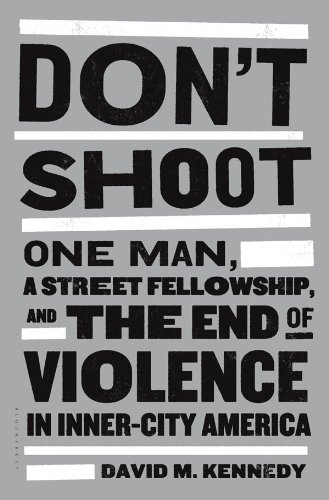
2. Currently reading this book also. The Author David Kennedy is co founder of "Cease Fire". He has spent decades studying Youth Violence and so far does an amazing job at detailing the complex issues surrounding youth and why they are involved in violence and how to address and possibly change the culture.

Favorite excerpt (thus far), "Nearly all of the worst violence and crime in America's most troubled neighborhoods is driven by a small, super-heated world of gangs and drug crews and drug markets. It is a world with its own rules, its own standards, its own understandings. It is a community, make no mistake; it is a community where men will kill for their brothers, die for their brothers, where being a thug is a good and honorable thing, where thug love means having your brothers' backs, no matter what the cost. It is world in which young men stand against a powerful, malevolent world and say to themselves and to each other, Prison's no big thing; I'm going to be dead by the time I'm twenty-five, so nothing really matters; if a man  is disrespected, he has to return violence or he's not a man; the enemy of my friend is my enemy; I'm a victim, so I'm justified in what I do." page 20

Purchase

B

Friday, May 17, 2013

Alcohol the most seductive lie ever told.

The past two weeks I have been inundated with discussions about the use of alcohol. Discussions about the culture of alcohol, the acceptance of alcohol use, the infinite number of reasons to drink alcohol, and the never ending excuses as to why someone doesn't have a “problem” with alcohol. I've sat with inmates and listened to their desire and plans to have a “cold one” when released from prison. I've sat across the desk from someone with early stage cirrhosis of the liver who continues to drink alcohol. I've heard the seductive telling of story after story, I've heard the errors in thinking and reasoning, I have heard a million explanations of why consuming alcohol is okay.  
Now I understand that there are those out there who can consume alcohol in a responsible way and by no means am I inferring that they have a “problem”.  Maybe it’s the nature of the work I am involved in or my natural observation of others, or my own corrupted opinion, I see and encounter many people who have issues around the use of alcohol. I observe others test themselves and their ability to control their use. I watch as some completely destroy themselves to drink. I had someone suggest to me that I probably was not an alcoholic. An interesting thing to say to someone who meets the DSM IV criteria for alcohol dependence. And maybe I’m not, but what if I am? The last drink of alcohol I had was December 27th, 1987. That night ended with me in a jail cell with multiple felony arrests. For me it’s not just the out of control behavior that being under the influence allows me to engage in, but the emotional turmoil that was triggered when in my addiction cycle. I know with all my heart that if I were to take a drink of alcohol I would be thrust into complete and utter emotional chaos. I have a hard enough time dealing with myself sober. I don’t want to drink, haven’t wanted to in long time. Have way too much to lose, the work I have invested in my life is worth the world to me; it’s definitely worth more to me than a drink. I feel blessed to know and understand that alcohol is the most seductive lie ever told.

B

Monday, October 29, 2012

"And there was a kid with a head full of doubt"- AB


This week I had the opportunity to visit a medium security prison and spend the day not only speaking to about 100 guys, but spent individual time with many of them. The prison is about an hour and half from my house and I had to be at the gate house between 8 and 830a.m. (which meant an early morning for me). During the drive I attempted to clear my head and focus on what I would say to them. This can be overwhelming as I usually walk into a gymnasium or commons area and they are there waiting for me to walk in and start talking. One of the ways I try to get myself focused and centered is through music. My music interests span many genres and time frames. However I recently have been listening to the Avett Brothers for my long drives at work and to relax when at home. There is one specific song “Head full of doubt/Road full of promise” which I found to be appropriate for this mornings commute and preparation. The lyrics of the song are:

 "Head Full Of Doubt / Road Full Of Promise"

 There's a darkness upon me that's flooded in light

 In the fine print they tell me what's wrong and what's right

 And it comes in black and it comes in white

 And I'm frightened by those that don't see it


When nothing is owed or deserved or expected

 And your life doesn't change by the man that's elected

 If you're loved by someone, you're never rejected

 Decide what to be and go be it

 
There was a dream and one day I could see it

Like a bird in a cage I broke in and demanded that somebody free it

And there was a kid with a head full of doubt

So I'll scream til I die and the last of those bad thoughts are finally out

I met many men who have spent 20 or more years locked up, many of which are murderers. They shared the same nervous anticipation that any person would have in their position. A scared of what the world is like after 20 years disposition. They shared stories of their children who were toddlers when they went away, who have grown up, got married, had their own children, and continued on with their lives. And I reflected on my last 20 years being in recovery, being free, and having a life. During the speaking part of my day I was in a gymnasium with about 100 men sitting in the bleachers, all dressed in the same state issued blue uniform (made by prisoners, wore by prisoners) and I talked about  many things including dreams and doubts. I know many of them will not make it once released. The burden of life on the outside is too much. The problems that lead them to incarceration remain, some have continued to grow. And I talked about it. I discussed what it means to be part of a community and the debt they must someday payback to their towns, their families. I talked about the responsibility they have to themselves, their children, their mothers, and their community. A shared responsibility we all have to be citizens.  We discussed plans, goals and more importantly I discussed dreams. I challenged them all to look inside themselves and find their dreams and use those desires to succeed, accomplish, conquer motivate and guide them to make better choices.  And I talked about a desire for something different
B